(How Recognition Is Reviewed, Confirmed, and Published)
Professional recognition carries weight only when supported by clear standards and transparent evaluation. At NILS, recognition is not promotional — it is structured, documented, and verifiable.
The verification process exists to ensure that recognition reflects measurable legal achievement and objective review. This article outlines how recognition is evaluated, recorded, and publicly confirmed.
The verification process begins with a structured application.
Applicants submit information aligned with the published standards of the specific award program. This may include documentation related to case outcomes, professional experience, specialty practice benchmarks, or other objective criteria defined by the program.
Submission alone does not result in recognition.
All applications are subject to review.
Each submission undergoes evaluation against clearly defined criteria. These criteria are established in advance and applied consistently.
Evaluation may include:
Review of documented case outcomes
Confirmation of professional standing
Assessment of experience benchmarks
Verification of submitted materials
Recognition is considered only when published standards are satisfied.
Objective evaluation ensures that recognition is earned through measurable achievement rather than nomination or payment.
The integrity of the verification process depends on consistency and objectivity.
Key principles include:
Evaluation against published criteria
No automatic recognition upon payment
Documentation-based review
Consistent application of standards
Recognition is not granted through popularity, peer voting alone, or promotional participation.
The review process exists to protect the credibility of the designation.
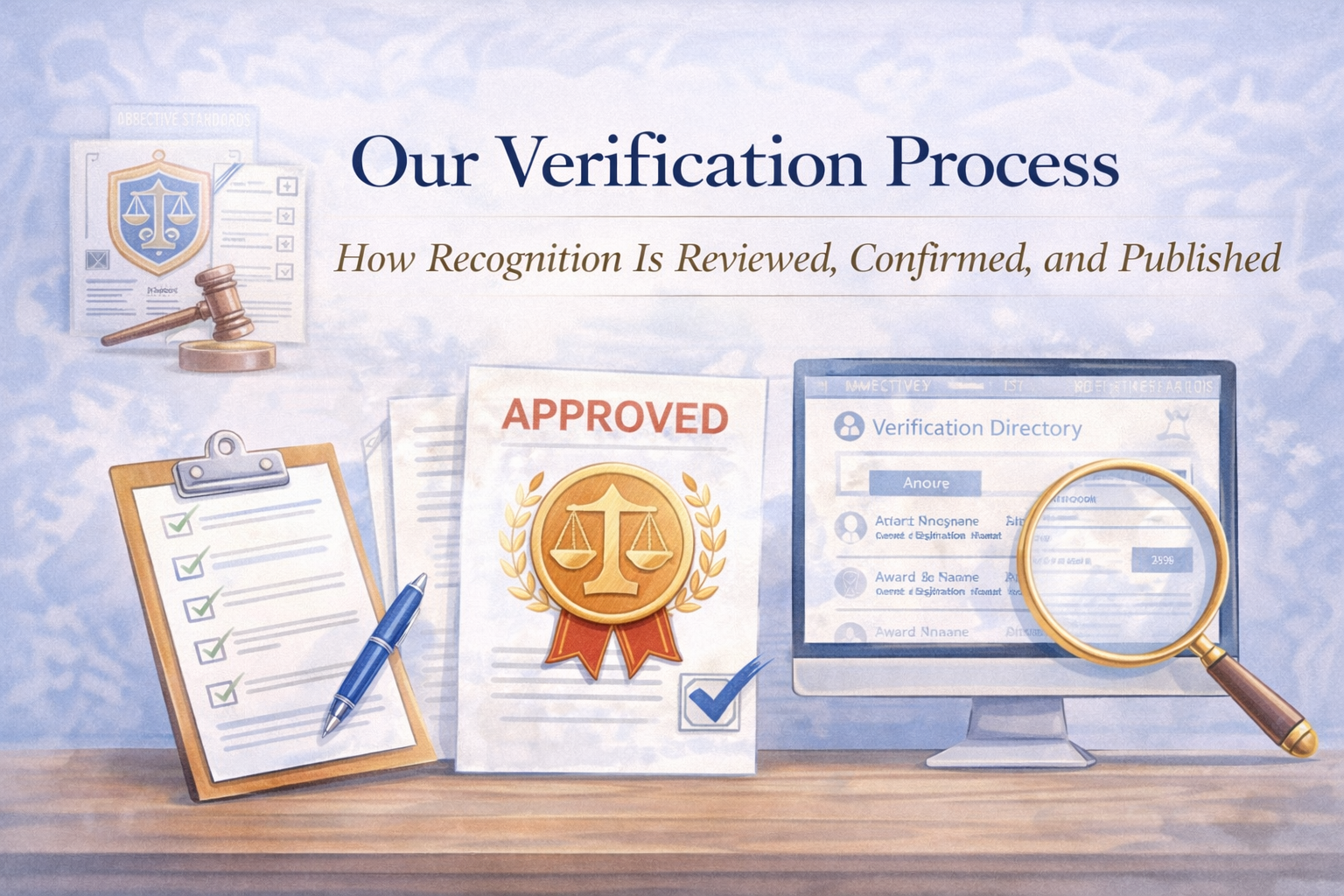
When an application satisfies program standards, recognition is formally approved.
Approved recognitions are then entered into the official verification directory. Directory listings typically include:
Attorney name
Award program designation
Recognition year
Practice area (if applicable)
Current recognition status
This step ensures that recognition is not merely announced but formally recorded.
Transparency is a core component of the process.
The verification directory allows clients, institutions, and members of the public to confirm recognition status directly through an official source. This prevents confusion and provides independent confirmation.
Verification strengthens accountability and ensures that recognition remains tied to documented standards.
Recognition programs require continued integrity to remain meaningful.
Directory records are maintained to reflect current recognition status. Programs operate under published standards designed to preserve consistency and transparency.
Recognition is not a marketing label. It is the result of documented review and structured evaluation.
A verification process protects:
Professional credibility
Public trust
The distinction between achievement and promotion
Transparency in attorney recognition
When recognition follows objective standards and is publicly verifiable, it retains its value.
Without structured evaluation and verification, professional designation risks becoming indistinguishable from advertising.
The verification process is designed to ensure that recognition reflects documented legal achievement and consistent standards-based review.
Recognition should be earned, reviewed, recorded, and publicly confirmable. By maintaining these principles, the integrity of professional distinction is preserved.